I Ching Oracle Sticks vs Yarrow Stalks: Method Differences
Compare I Ching yarrow stalks with numbered fortune sticks, including objects, outputs, recording steps, and interpretation limits.
Quick Answer: I Ching oracle sticks may refer loosely to yarrow stalks used to build six line values, but numbered fortune sticks such as kau cim are a different temple-lot method; identify the set and instructions before calling the result an I Ching reading.
Oracle-stick method differences
- Yarrow option
- A counting procedure builds one line value at a time.
- Fortune-stick option
- A numbered stick points to a separate verse or lot.
- Output difference
- The I Ching method builds six lines; a lot method points to one indexed verse.
- Identification difference
- Numbered sticks and a verse set indicate a different use case.
- Use limit
- Both are interpretive traditions, not certainty tools.
Identify the objects before naming the method
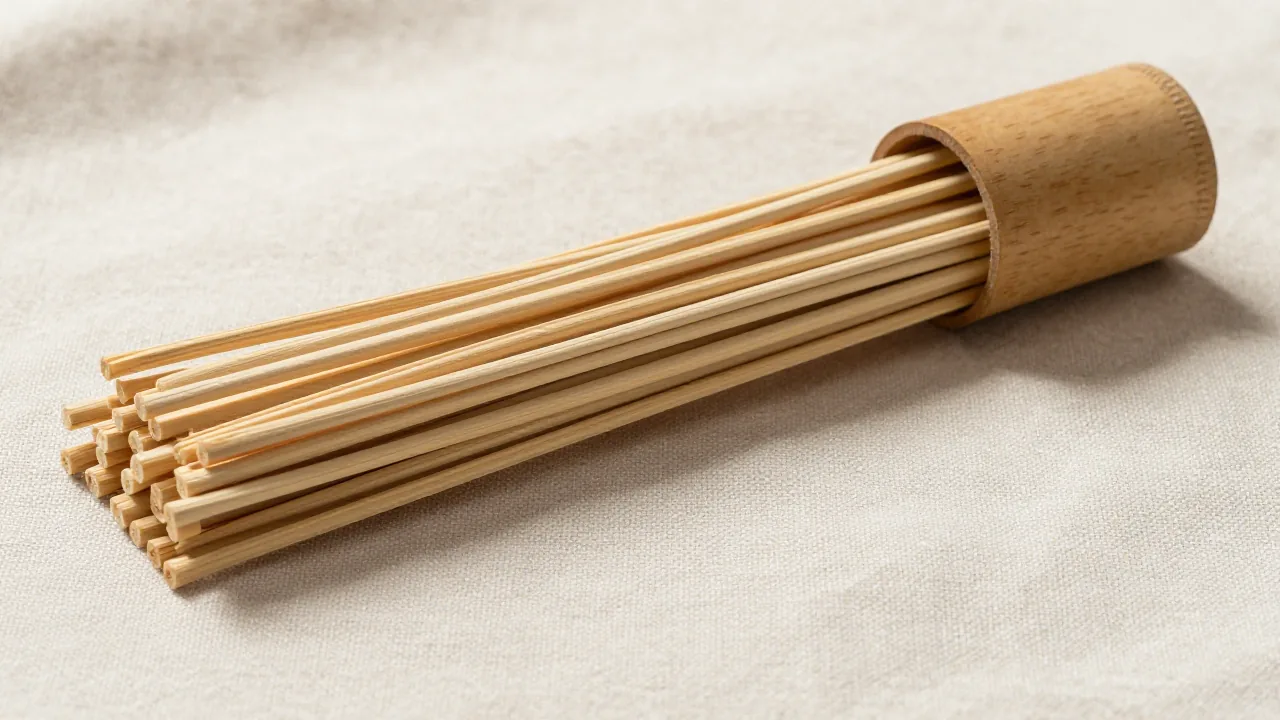
The phrase i ching oracle sticks is ambiguous. A bundle of plain counting stalks can belong to an I Ching line-building method, while a tube of numbered sticks often belongs to a temple lot tradition such as kau cim.
Look for numbers, a matching verse set, a shaker tube, or instructions that tell the user to draw one lot. Those signs do not describe the standard six-line yarrow procedure.
If the pieces are plain and the instructions repeatedly divide and count them to generate six line values, the method is closer to yarrow-stalk consultation.
Compare one drawn lot with six constructed lines
A fortune-stick draw normally produces one numbered reference that leads to a verse or interpretation. The number is an index, not a six-line hexagram by itself.
An I Ching yarrow procedure constructs the reading from the bottom line upward. Each line receives a value, and the completed set identifies the primary hexagram.
Because the outputs differ, a numbered lot should not be converted into a hexagram unless the specific tradition documents that bridge.

Record yarrow values without skipping the sequence
For a yarrow-style I Ching reading, record each line as 6, 7, 8, or 9 while working from bottom to top. Values 6 and 9 are the changing lines in the common convention.
Keep the question, method variant, line values, primary hexagram, and relating hexagram together. A photo of the stalks alone is not enough to reproduce the result.
Traditional yarrow procedures have variants, so follow one documented sequence from start to finish rather than combining convenient steps from different summaries.
Read fortune-stick instructions in their own context
Temple fortune-stick practices have their own regional, religious, linguistic, and institutional settings. A translated verse detached from that setting can lose important qualifiers.
Use the instructions supplied by the temple, collection, or documented source. Do not relabel the lot as I Ching merely because both practices use slender objects.
If a commercial set does not identify its tradition or verse source, describe it cautiously and avoid inventing a lineage for the product.
Keep interpretation separate from evidence
Either method can be used as a structured reflection practice, but neither confirms future events or hidden facts. Compare the result with what is known about the situation.
Do not let an oracle result replace medical, mental-health, legal, financial, safety, or relationship advice. Consent and observable information remain primary.
The most useful first step is methodological: name the objects, the operation, and the output before interpreting anything.
Oracle-stick identification checklist
- Check whether the sticks carry numbers.
- Look for a verse or lot index.
- Confirm whether the method builds six lines.
- Record the chosen procedure and output separately.
- Do not convert between traditions without a source.
I Ching oracle-stick questions
Are all oracle sticks yarrow stalks?
No. Numbered fortune sticks can belong to a different lot tradition.
Does one numbered stick make a hexagram?
Not in the standard six-line I Ching method.
How are yarrow results recorded?
Record six values from bottom to top, including any changing lines.
Can methods be combined?
Only when a documented tradition explicitly explains the connection.
Do oracle sticks predict with certainty?
No. Treat them as interpretive traditions rather than guaranteed forecasts.