BEGINNER GUIDE
I Ching Guides
Learn coin casting, changing lines, relating hexagrams, and responsible interpretation in plain English.
Guide library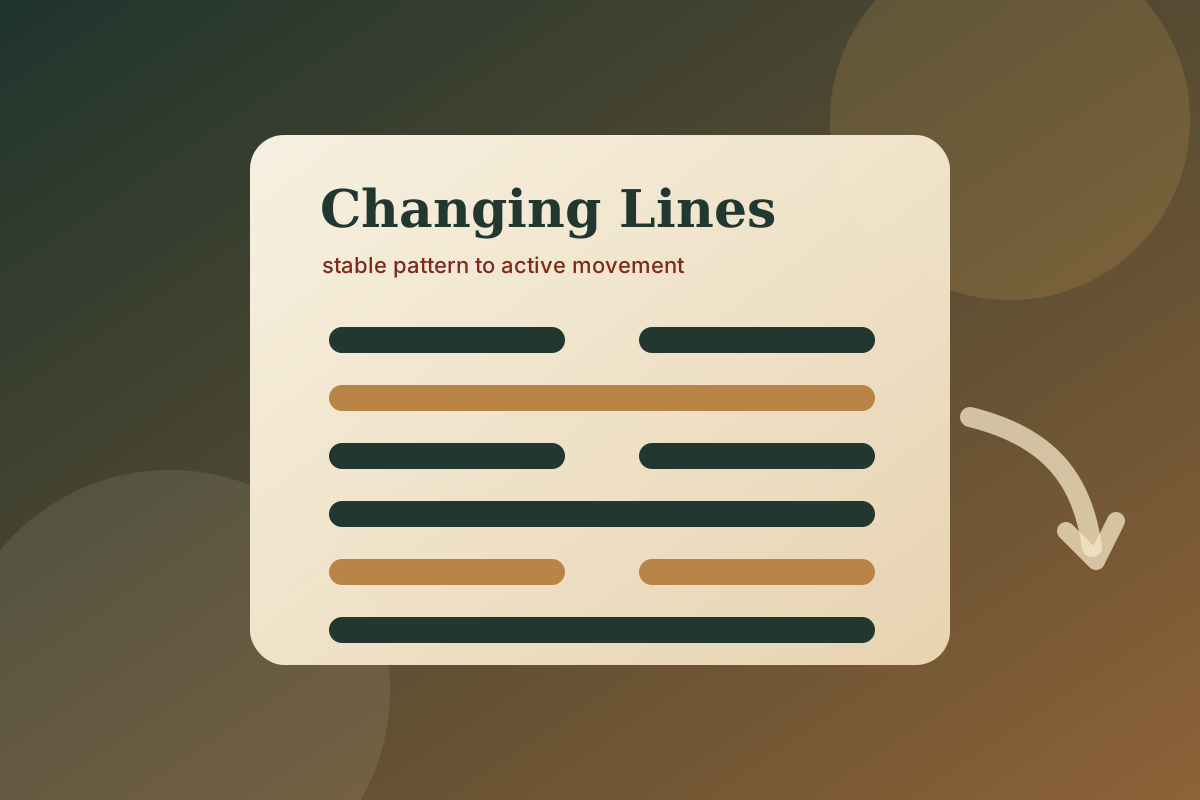


Learn the I Ching without cheap mysticism.
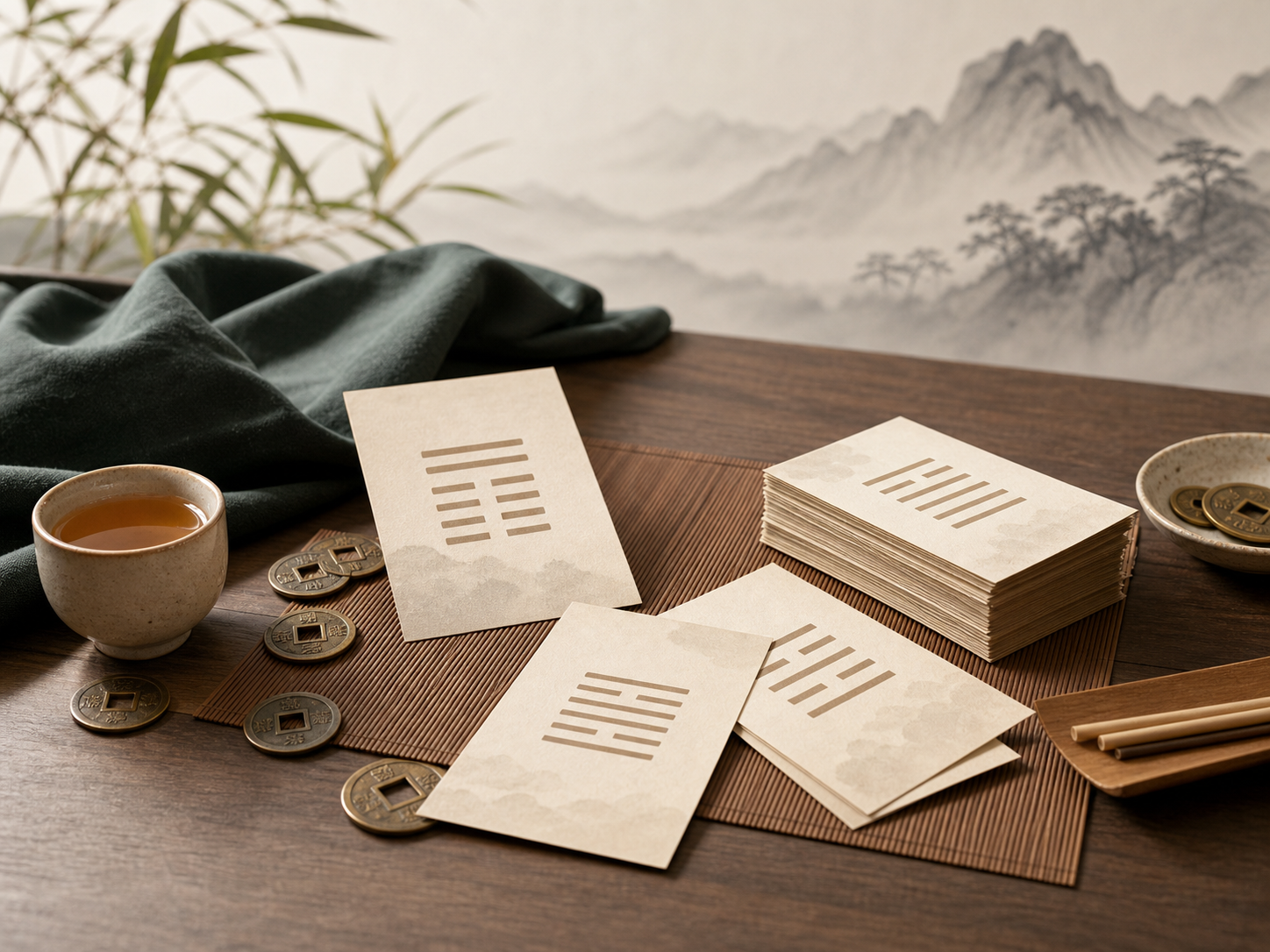
Guides explain casting, changing lines, hexagrams, and interpretation boundaries.
Hexagrams
64 Hexagrams Meaning
Use the full 64-hexagram set as a lookup reference, with clear limits around moving lines and prediction claims.
Read guideHexagrams
What Changing Lines Mean
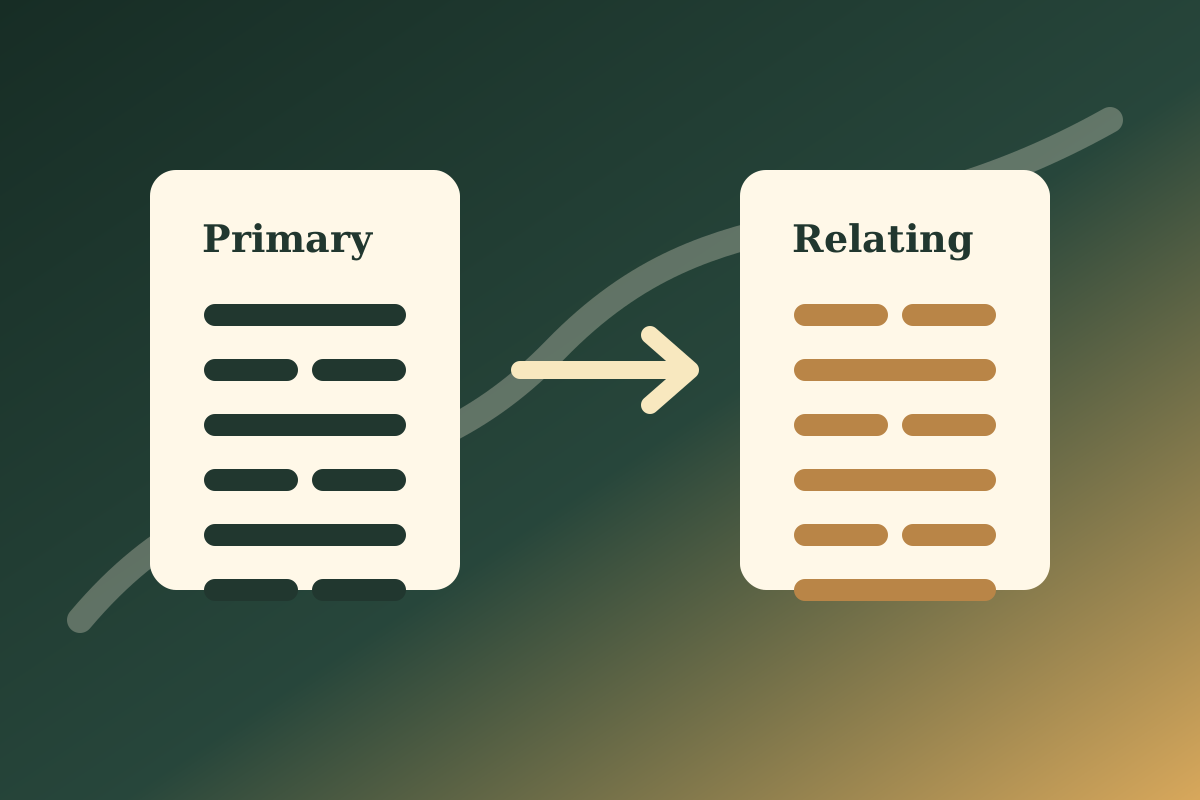
Understand movement from the primary hexagram toward the relating hexagram.
Read guidePractice
Beginner I Ching Interpretation
Use the result as structured reflection, not as automatic instruction.
Read guideRelationships
I Ching Love Reading Guide
Ask relationship questions without turning the reading into control, certainty, or fear.
Read guideDecisions
I Ching Career Decision Guide
Use a career reading beside facts, deadlines, contracts, and responsible next steps.
Read guideMovement
Relating Hexagram
Learn how the relating hexagram shows direction after changing lines, without treating it as a fixed prediction.
Read guideHelp
FAQ Overview
Use the FAQ when you need quick boundaries on fortune telling, repeated questions, serious decisions, and changing lines.
Open FAQLearning order
Recommended guide path
New readers often jump straight from a cast result to a fixed meaning. A better path is to understand the method first, then the hexagram, then changing lines, then the relating hexagram. This keeps the reading connected to the question instead of turning it into a list of disconnected symbols.
1. Casting method
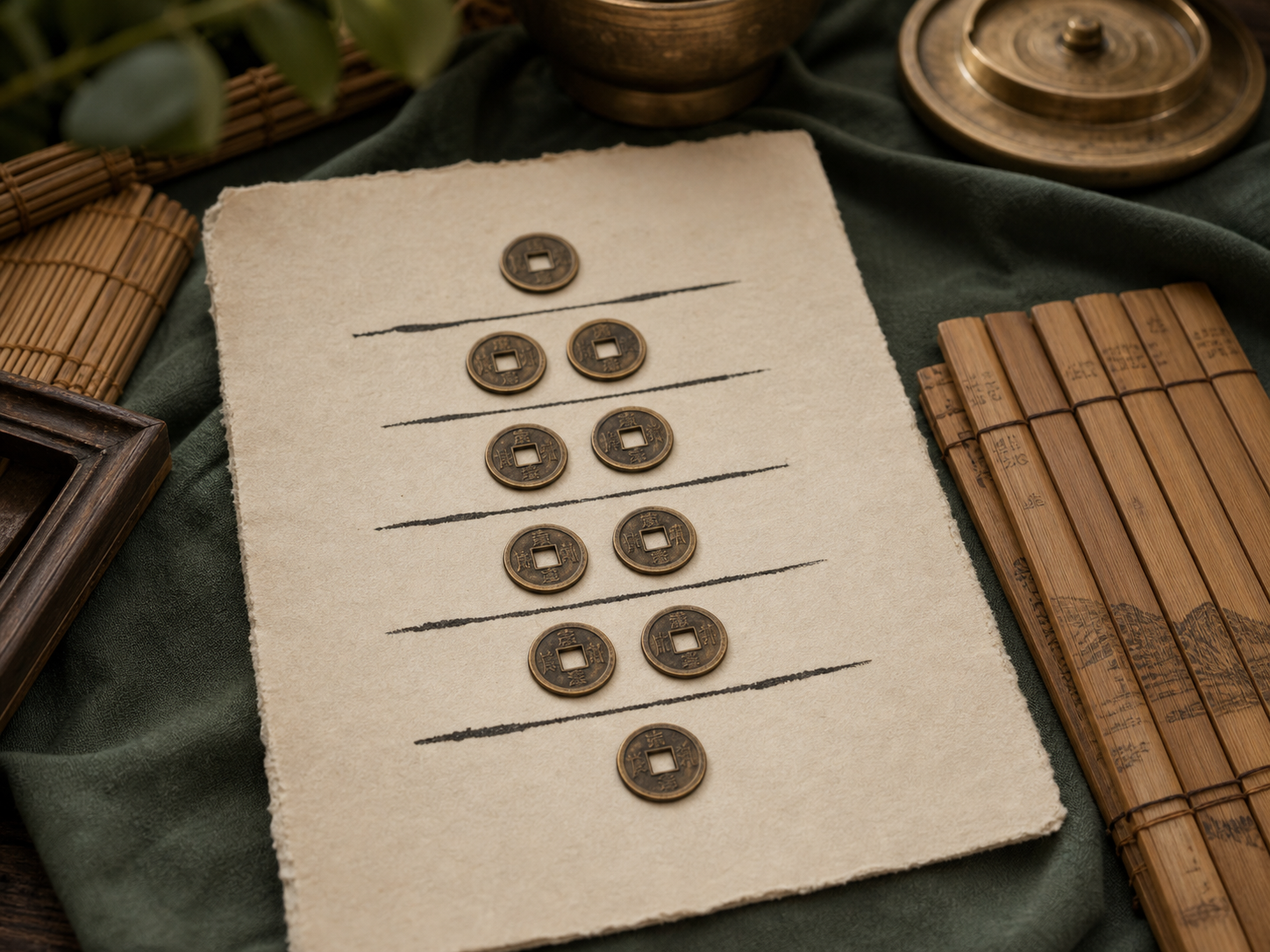
Learn how six lines are created and why the bottom line is recorded first. This prevents basic reading mistakes before interpretation begins.
2. Primary hexagram
Use the primary hexagram to name the current pattern. It should be read as the situation you are standing in now.
3. Changing lines
Changing lines point to the active pressure in the reading. They help explain what needs adjustment.
4. Relating hexagram
The relating hexagram shows a possible direction after the changing lines move. It is not a separate fortune.
How to read these guides
Read slowly and connect every idea back to the original question. If a guide describes conflict, waiting, return, progress, or limitation, ask where that pattern appears in the real situation. Avoid treating one phrase as a final answer. The value of the I Ching comes from comparing layers and noticing what the situation asks from you.
These guides are intentionally practical. They do not require previous knowledge of Chinese philosophy, but they respect the tradition by keeping interpretation disciplined. Each page should help you ask better questions, record the cast accurately, and avoid overclaiming what a reading can know.
Guide standard
How this guide library supports better readings
The guide library is designed to prevent the most common beginner error: reading one phrase and treating it as a final answer. A responsible I Ching reading connects the question, primary hexagram, changing lines, and relating hexagram. Each guide explains one part of that sequence so the reader can build interpretation step by step.
Start with the coin guide if you are unsure how a hexagram is formed. Move to the changing-lines guide when your result includes active lines. Read the relating-hexagram guide when you want to understand the direction created by those changes. Use the beginner interpretation guide when you need a simple method for turning the reading into a grounded next step.
The pages avoid exaggerated spiritual claims. They explain cultural terms in practical English and keep reminding the reader to use evidence for serious decisions. This makes the site safer for beginners and more useful for repeat readers who want a consistent method.
Beginner safety
What these guides deliberately avoid
The guides avoid fear-based language, exaggerated certainty, and instructions that tell readers to obey a symbol without thinking. They also avoid treating Chinese cultural material as a decorative aesthetic. The point is to make the reading process understandable: question, cast, primary hexagram, changing lines, relating hexagram, action boundary.
A beginner can use the guide library as a reference after every cast. If the result contains changing lines, read that guide. If the result feels like it points to the future, read the relating-hexagram guide. If the whole reading feels vague, return to the interpretation guide and improve the original question.
Reference habit
Use the library after each cast
A good habit is to open the guide page that matches the confusing part of the result. If the method is unclear, review casting. If the movement is unclear, review changing lines. If the future direction seems too tempting, review the relating hexagram boundary. This keeps learning attached to real use.
New guidesReflection Guides Decision Guides
Updated on 2026-07-22
I Ching Daily Journal Method: Record One Reading Clearly
Use an I Ching daily journal method to record the question, primary hexagram, changing lines, relating hexagram, and one practical reflection note.
Read guideI Ching Work Decision Reading: Use Hexagrams Without Overclaiming
Read an I Ching work decision with practical boundaries, changing line review, real evidence, and a calm next-step checklist.
Read guide