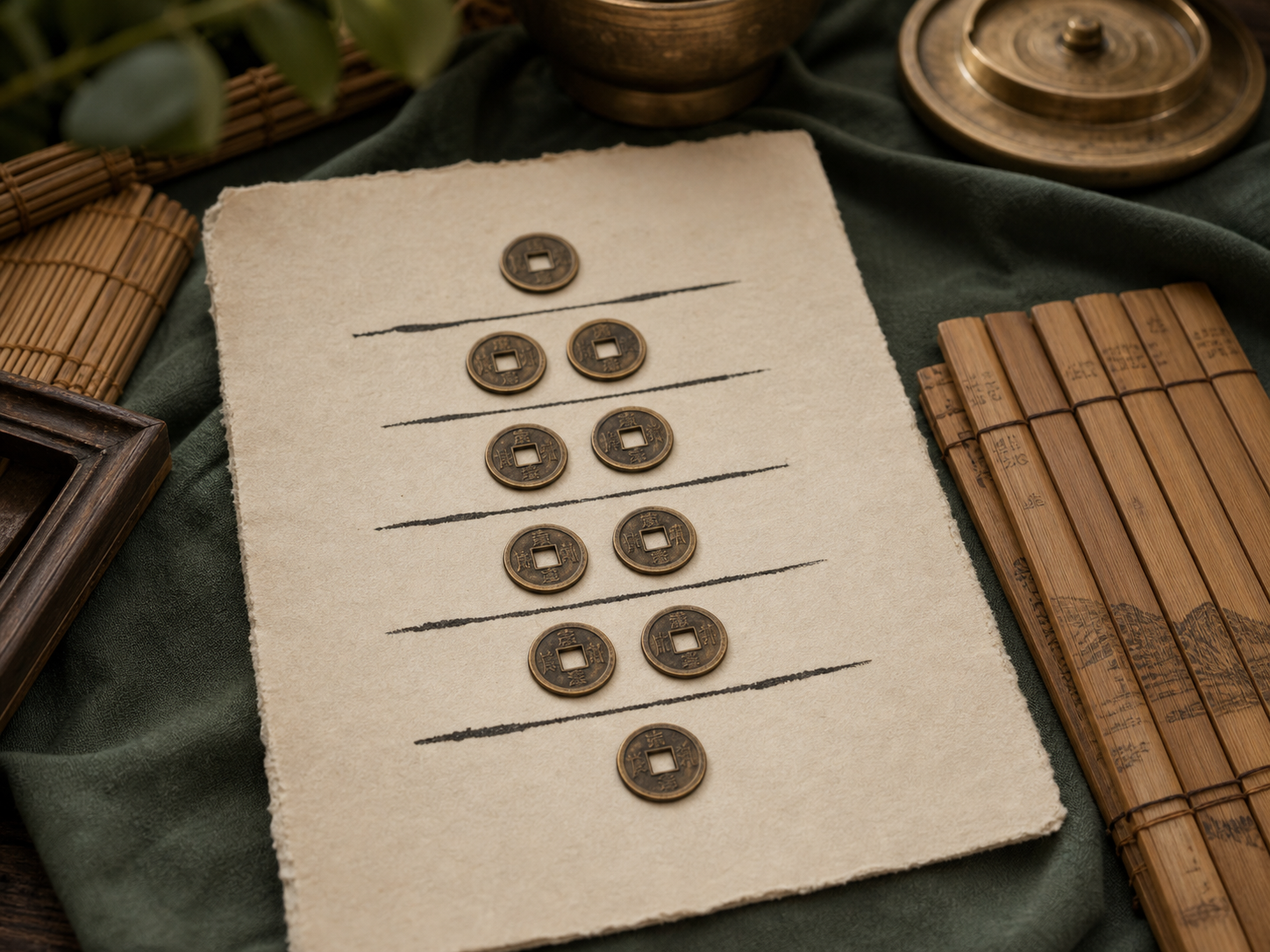
 Casting guide
How to Use I Ching Coins for a Simple Reading
To use three I Ching coins, choose one value convention, toss all three coins six times, record each total from the bottom line upward, and mark totals of 6 or 9 as changing lines before interpretation. You can cast by hand or use the free I Ching reading tool after learning the method.
Quick Answer
Use three similar coins and write one focused question. Count heads as 3 and tails as 2 for every toss. Add the three values, write the resulting line at the bottom of your record, and repeat until you have six lines. A total of 6 is changing yin, 7 is stable yang, 8 is stable yin, and 9 is changing yang. Read the primary hexagram first, then any changing lines, and only then the relating hexagram.
Quick Facts
- Coins per toss
- Three similar coins
- Number of tosses
- Six, one for each line
- Recording order
- Bottom line to top line
- Value convention
- Heads 3, tails 2, kept consistent
- Changing totals
- 6 for changing yin and 9 for changing yang
Prepare one question and one fixed coin convention
Write the question before touching the coins. A useful question describes one situation you can observe, such as what deserves attention before a work decision, how to approach a difficult conversation, or what condition should be checked before committing time or money. Avoid combining several unrelated concerns in one cast. The reading becomes harder to interpret when the question changes halfway through.
Choose the value convention before the first toss. This guide uses heads as 3 and tails as 2. Other written traditions may label the sides differently, so consistency matters more than changing methods to chase a preferred result. Keep a notebook, pencil, and a flat surface nearby. Leave room for six totals and six line shapes.
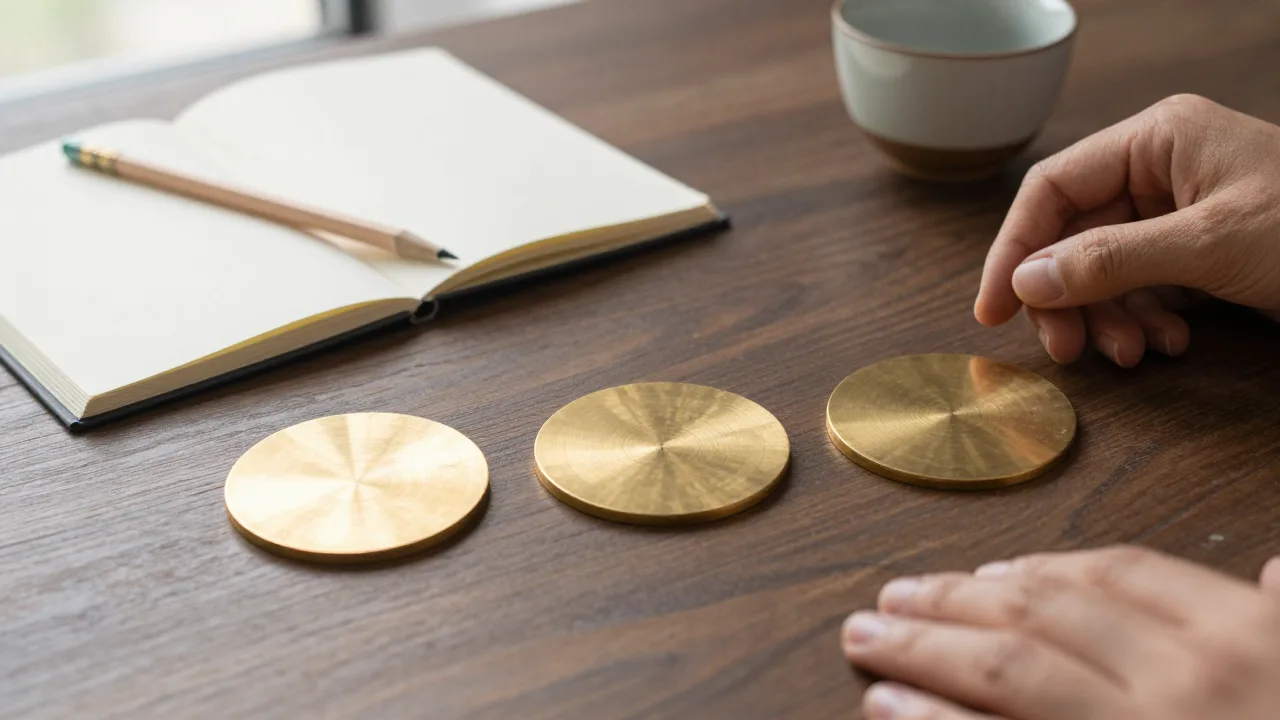
Cast and record six lines from bottom to top
Toss all three coins together. Add their values and write the total as the first, bottom line. Repeat the same action five more times, placing each new result above the previous one. This bottom-up order is essential: the first throw is never the top line. If a coin rolls away or the result is genuinely unreadable, repeat that throw once and note why. Do not repeat a clear throw merely because its value feels inconvenient.
Translate each total immediately instead of relying on memory. Six is old yin, shown as a broken changing line. Seven is young yang, a stable solid line. Eight is young yin, a stable broken line. Nine is old yang, a solid changing line. Mark changing lines as you go, but finish all six throws before looking up meanings. This keeps the record separate from interpretation.
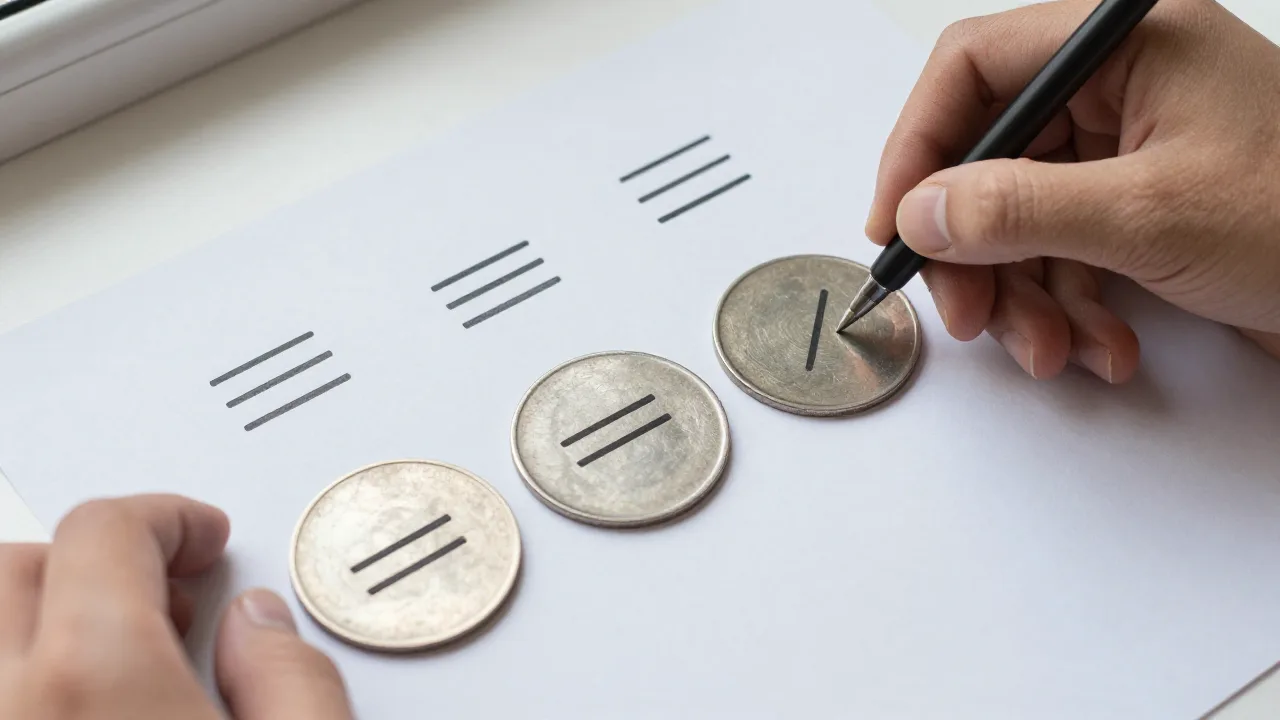
Quick reference for coin totals
| Total | Line type | Shape | Changes? |
|---|---|---|---|
| 6 | Old yin | Broken | Yes, toward yang |
| 7 | Young yang | Solid | No |
| 8 | Young yin | Broken | No |
| 9 | Old yang | Solid | Yes, toward yin |
An illustrative record might read 8, 7, 7, 6, 8, 9 from bottom to top. That record is not a suggested answer; it simply shows how totals preserve more information than line shapes alone. The fourth and sixth lines would be marked as changing, while the other four remain stable. Keep the original totals even after drawing the primary and relating hexagrams.
Read the completed cast in three layers
Identify the primary hexagram from the six original lines and read its main text first. Treat it as the present pattern around the question, not as an isolated prediction. Next, read only the changing-line passages that correspond to totals of 6 or 9. These lines highlight movement or tension within the same situation. Finally, change those active lines to form the relating hexagram and read it as a possible direction or contrast.
If there are no changing lines, stay with the primary hexagram. A second pattern does not need to be invented. If several lines change, slow down and keep every comment tied to the original question. The changing lines guide explains how to keep active lines separate, and the relating hexagram guide explains the transformed pattern without treating it as a guaranteed future.
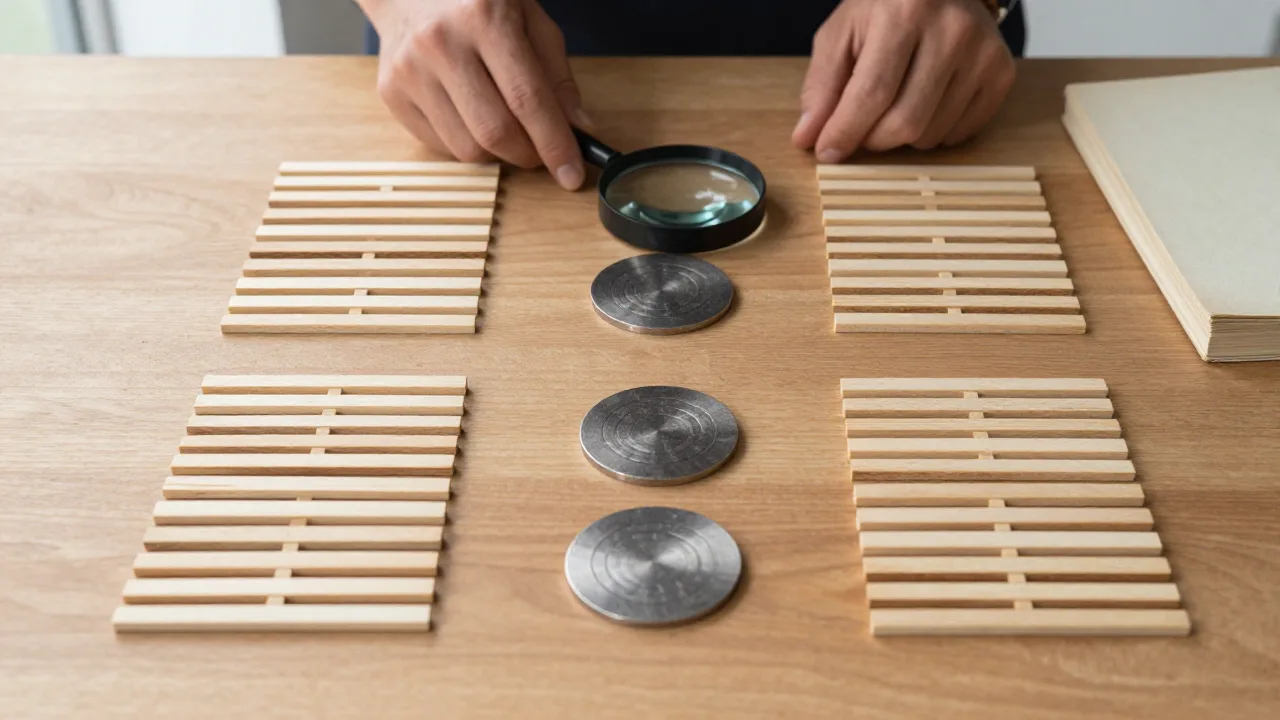
Check the record before interpreting
Most errors come from process rather than symbolism. Confirm that there are exactly six totals, the first is at the bottom, the heads-and-tails convention stayed fixed, and every 6 or 9 is visibly marked. Do not refresh or recast immediately because the first result feels uncomfortable. Recasting can turn reflection into a search for permission.
Keep the exact question beside the six totals, the primary hexagram, changing lines, and relating hexagram. A complete record lets you return later without reshaping the reading around mood or memory. It also makes translation comparisons easier because the cast itself stays fixed while wording changes between editions.
Close with a grounded next step
End by writing one small action that remains sensible outside the reading. You might gather a missing fact, ask a direct question, pause a purchase, repair a neglected detail, or wait until a deadline is clearer. The I Ching can provide a cultural framework for reflection, but it cannot guarantee an outcome or replace medical, legal, financial, safety, or relationship judgment.
For source context, consult a full translation rather than relying only on short summaries; the public-domain I Ching text on Wikisource is one accessible reference. Compare wording carefully, keep your original line record visible, and separate what the text says from what you infer for your situation.
Keep a reading record you can review later
A useful journal entry has five parts: the date, the exact question, the six numerical totals, the identified hexagram or hexagrams, and one short reflection written before taking action. Numerical totals matter because a drawn solid or broken line alone does not show whether that line changes. If you use a printed chart or online lookup, check the lower and upper trigrams against your handwritten stack before accepting the hexagram number.
When comparing translations, copy a short phrase that seems relevant and then write your own interpretation separately. This prevents the source text, a translator's wording, and your personal inference from blending into one claim. Return after the real situation develops and note what was useful, what was too vague, and what facts mattered more than the cast. Review turns a one-time answer into a disciplined reflective practice.
When to pause instead of casting again
Pause when the question depends on information another person can simply provide, when the decision requires professional advice, or when anxiety is driving repeated casts. Ask for the missing fact, speak directly to the person involved, or use the appropriate safety and professional resources first. You can return to the reading later as a journal prompt, but it should not delay urgent action or override consent.
Also pause when you cannot state the question in one sentence. Spend a few minutes separating the decision, the fear, and the hoped-for outcome. A clearer question may reveal that no cast is needed. The method is most useful when it slows interpretation down, preserves a fixed record, and leads back to accountable choices rather than certainty.
Store the record in a stable format rather than only in a temporary browser result. Include the edition or lookup source you used, because numbering is shared while translations and explanatory notes differ. If you discuss the reading with someone else, show the original question and line totals before offering a conclusion. That order makes it easier to distinguish the cast, the source text, and later advice. A careful record also prevents a common hindsight error: quietly changing the question after events unfold so the reading appears more exact than it was.
Frequently Asked Questions
Which side of the coin is yin or yang?
This guide uses heads as 3 and tails as 2. Some traditions label the sides differently. Choose one documented convention before the first toss and keep it for all six throws.
Why are I Ching lines recorded from bottom to top?
The hexagram is constructed upward. The first toss creates the bottom line, and the sixth toss creates the top line.
Should I toss again if I dislike the result?
No. Record a clear toss as it falls. Repeating a valid throw to obtain a preferred result undermines the fixed record needed for interpretation.
What if there are no changing lines?
Read the primary hexagram and stay with it. Without totals of 6 or 9, there is no relating hexagram that needs to be forced.