Reading tool
Cast six lines
Generate a stable starter reading from a clear question and see changing lines.
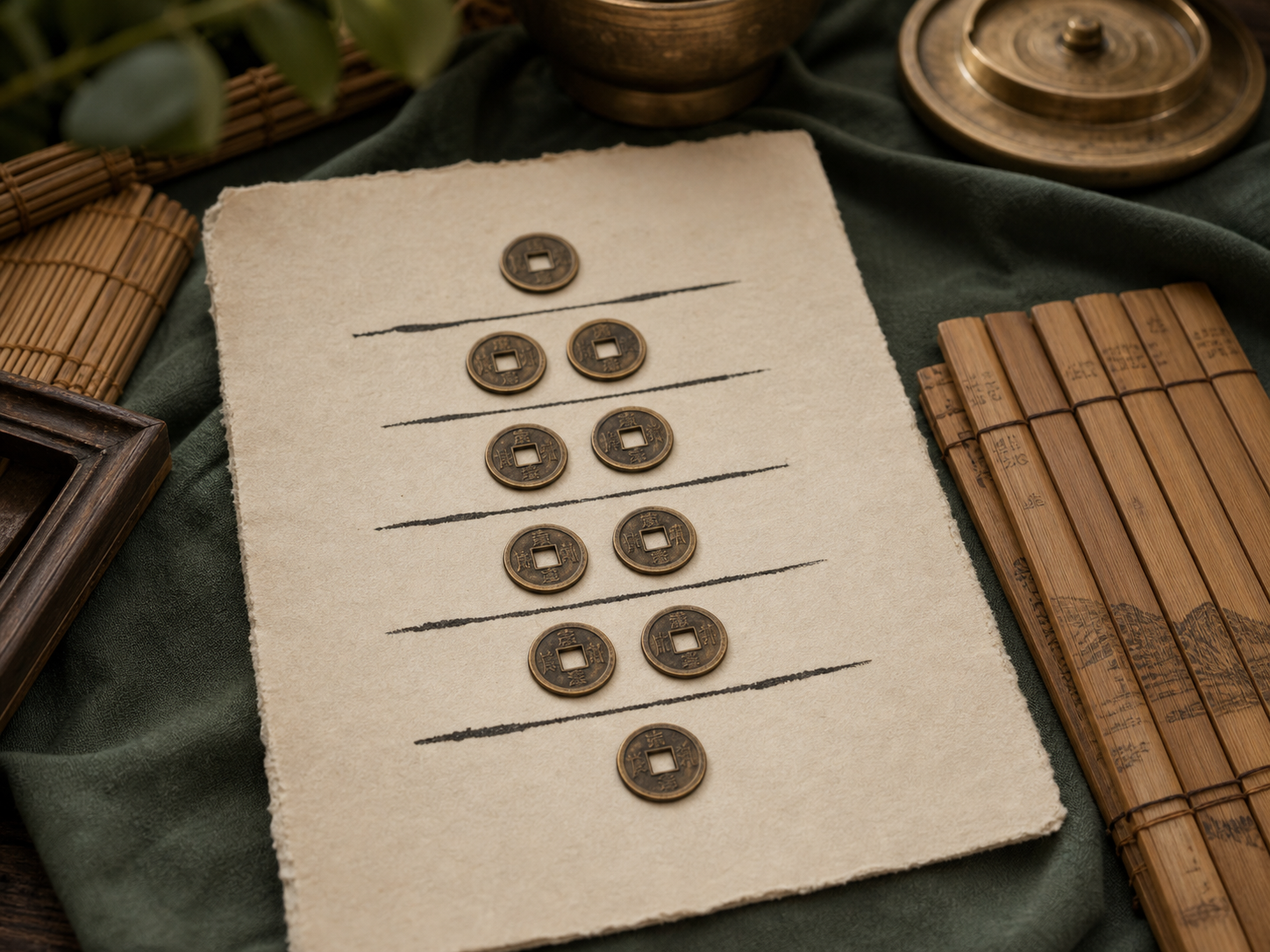
Ask a clear question, cast six lines, then read the primary hexagram, changing lines, and relating pattern as a cultural reflection note.
Use one specific question. The result is deterministic for the same question, so it behaves like a stable starter reading instead of a random toy.
The site starts with the tool, but the value comes from explaining how the pattern is formed and how to read it responsibly.
Generate a stable starter reading from a clear question and see changing lines.

Learn primary hexagram, relating hexagram, trigrams, and movement.

Turn the result into better questions, not automatic decisions.
The full report is optional. It expands one free cast into a clearer written reading with the primary hexagram, changing lines, relating trend, practical notes, and a 7-day action plan. It is designed for reflection and decision review, not guaranteed prediction.
Each result is six lines, with yin and yang forming the base pattern.
Changing lines mark the places where the reading shifts.
Plain English keeps the cultural meaning accessible without flattening it.
Better questions produce more useful reflection than vague prediction-seeking.
Many online divination pages give a result without explaining how to use it. This site is built differently. It explains the reading sequence, the meaning of the hexagram layer, the role of changing lines, and the boundary between reflection and real-world responsibility. A visitor should be able to use the free tool, understand the result, and decide whether deeper explanation is useful without being pushed by fear.
The home page links to three practical paths. The tool path is for readers who want to cast a question immediately. The hexagram path is for readers who already have a result and need a plain-English theme. The guide path is for readers who want to learn the method before relying on a reading. These paths work together so the site is not only a one-click generator; it is a small learning library around I Ching interpretation.
The paid report is positioned as an optional extension of a free cast, not a replacement for judgment. It adds structure, line guidance, relating-hexagram context, and a 7-day action plan. The product value comes from organizing the reading clearly, not from claiming supernatural certainty.
The free pages are not filler around the paid report. They are the trust layer of the site. A visitor can learn what a hexagram is, how changing lines work, why a relating hexagram matters, and how to avoid overreading a result before spending anything. This matters for both user experience and responsible paid report use.
For an I Ching site, trust comes from restraint. The content should be specific enough to help, but careful enough not to promise certainty. The site therefore explains patterns, reading order, and practical use cases while keeping disclaimers visible. The intended outcome is better reflection, clearer questions, and more responsible decisions.