Good question examples
Ask about one real situation: a work decision, a relationship pace, or what needs attention before committing time or money.
Cast a three-coin reading, review changing lines, and use the hexagram lookup and guides to interpret one focused question.
Ask one clear question, cast six lines, then use the result to review the primary hexagram, changing lines, and relating pattern in order.
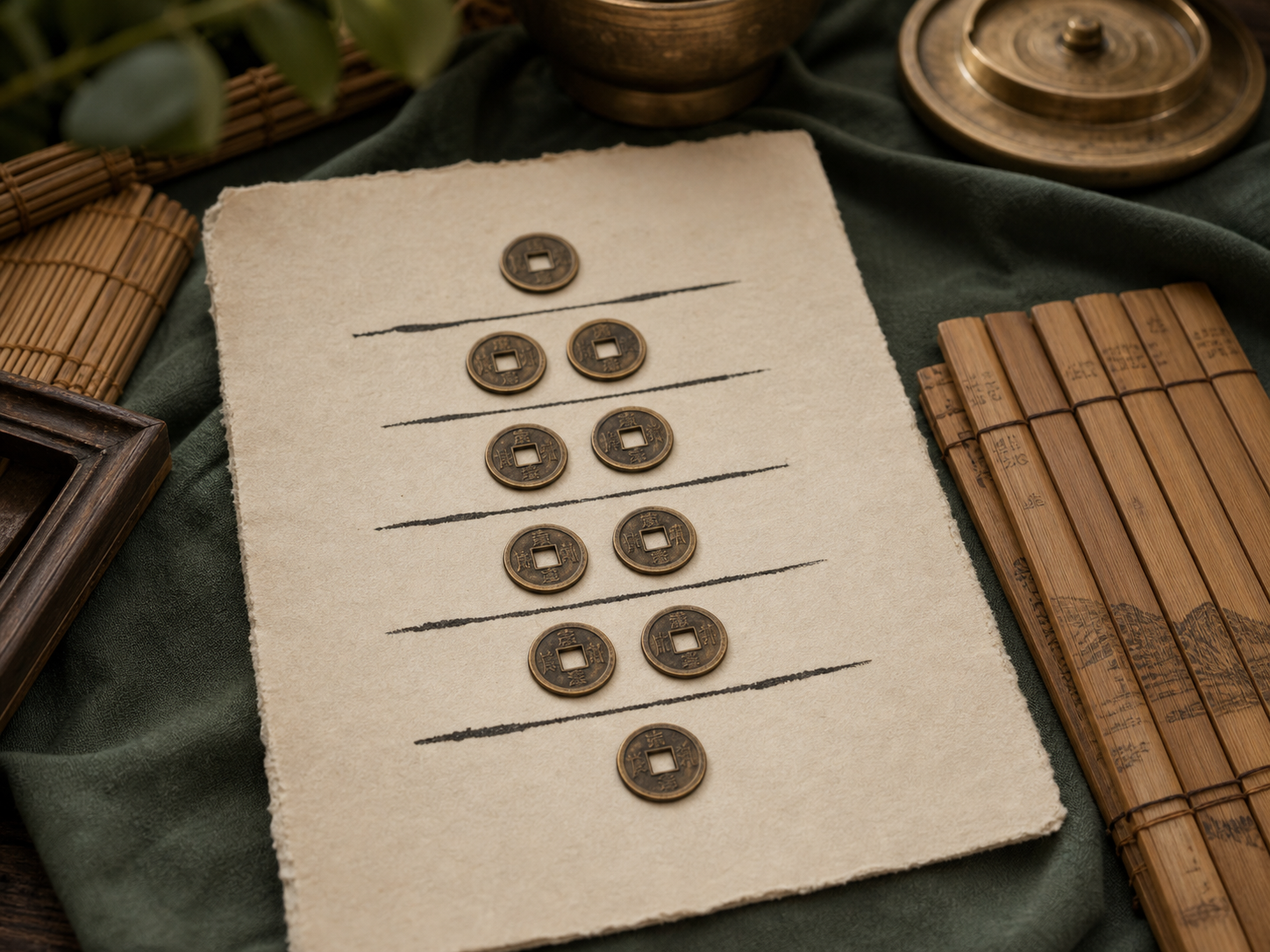
Type one clear question about work, love, money, timing, or a decision. Keep it about one specific situation.
Turn the free hexagram result into a clearer personal reading with plain-language meaning, changing-line guidance, relating-hexagram trend, decision notes, and a 7-day action plan.
The report is a one-time written reading for the question and cast on this page. It is delivered by email as a report link and does not create a subscription.
The tool works best with one clear question at a time. It creates a primary hexagram, marks changing lines when they appear, and shows the relating pattern formed after those lines change.
Write the question before casting. Read the first result without refreshing repeatedly. If the answer feels uncomfortable, rewrite what the issue actually is instead of casting again immediately.
After the cast, look for three things: the current pattern, the active pressure point, and the possible direction. A good reading connects all three layers back to the same real-world situation.
Ask about one real situation: a work decision, a relationship pace, or what needs attention before committing time or money.
The free cast gives the visible hexagram pattern, a short reading focus, changing-line information, and the relating pattern.
The paid report expands the cast into plain explanation, line guidance, relationship/work/money notes, and a 7-day action plan.
After casting, do not rush to buy a report or cast again. First read the result on the page and write down the primary hexagram, any changing lines, and the relating hexagram. Then compare the result with the original question. The most useful reading usually points to one practical issue: timing, restraint, communication, repair, support, or a boundary that needs to be named.
If the answer feels too general, the question may be too broad. Rewrite the question in plainer language and identify one real decision or situation. For example, instead of asking whether life will improve, ask what needs attention before accepting a job offer, starting a conversation, or committing money. Clearer questions create clearer readings.
The tool is intentionally cautious. It does not ask for private identity records and it does not claim to know the future. It helps turn a symbolic pattern into a structured reflection note that you can compare with facts, conversations, and your own judgment.
Before taking action, compare the reading with observable facts. If the reading points toward waiting, define what evidence you are waiting for. If it points toward action, define the smallest action that can be tested safely. This keeps the tool useful without turning it into blind obedience.
Use these checks before casting again or upgrading to a report. They keep the reading practical instead of turning it into a prediction claim.
No. The site treats an I Ching reading as cultural reflection and decision review. It can help you slow down, name a pattern, and choose a grounded next step, but it does not guarantee the future.
The cast uses a random process to form a hexagram, similar to traditional coin casting. The useful part is reading the result against one clear question with care and restraint.
Ask about one real situation. Good questions include what needs attention before a work decision, what response fits a relationship problem, or what risk should be reviewed.