Yin Yang Lines I Ching Meaning: Solid and Broken Lines
Learn how yin and yang lines work in the I Ching, how they form trigrams and hexagrams, and where interpretation limits begin.
Quick Answer: In the I Ching, an unbroken line is commonly read as yang and a broken line as yin. A reading uses six stacked lines, from bottom to top, so the line type matters together with position, trigram grouping, and any moving-line note.
- Line attribute
- Solid is usually read as yang and broken as yin in a basic I Ching record.
- Source boundary
- Use a named I Ching source for interpretation rather than reading one mark alone.
- Position range
- Six positions are recorded from bottom to top.
- Trigram attribute
- Three lower and three upper lines form trigrams.
- Interpretation boundary
- A single line mark is not a complete interpretation.
Start with the two visible line forms
The fastest way to understand an I Ching record is to look at the marks before looking for a meaning. A solid horizontal line is commonly called yang, while a broken horizontal line is commonly called yin. Those two visible forms are the alphabet of a hexagram, but they are not the whole sentence.
Keep the first check visual and modest. Ask whether each position is solid or broken, then record it exactly. Do not turn one mark into a personality statement, a yes-or-no answer, or a forecast. The line form only becomes useful when it is placed with the other five lines.
This simple distinction also prevents a common mistake: reading the drawing as decoration. The spacing, order, and type of each line matter because the final hexagram is built from all six positions. A clean record is more useful than a dramatic interpretation made too early.
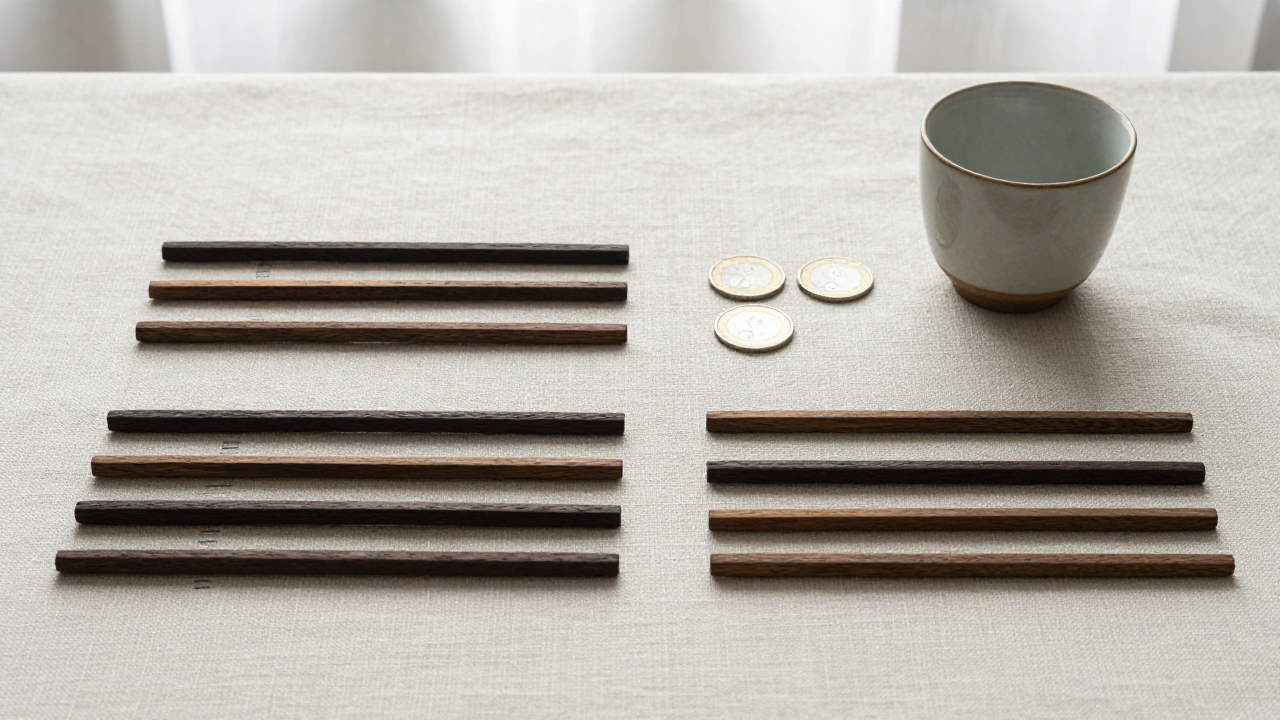
Stack six positions before naming a hexagram
An I Ching hexagram is not named from one line. It is a stack of six positions, read from the bottom upward. When you cast coins or yarrow stalks, the first result becomes the bottom line, the second result sits above it, and the sequence continues until the sixth line is recorded at the top.
The bottom-to-top habit matters because reversing the order can point to a different figure. A quick sketch should therefore leave enough space to show all six positions clearly. If a line is uncertain, repeat the record from the source rather than correcting it from memory.
Once the six marks are stable, a lookup table or tool can identify the hexagram. At that stage, the reader is no longer guessing from a symbol; the answer is tied to a visible six-line pattern that another person could verify.
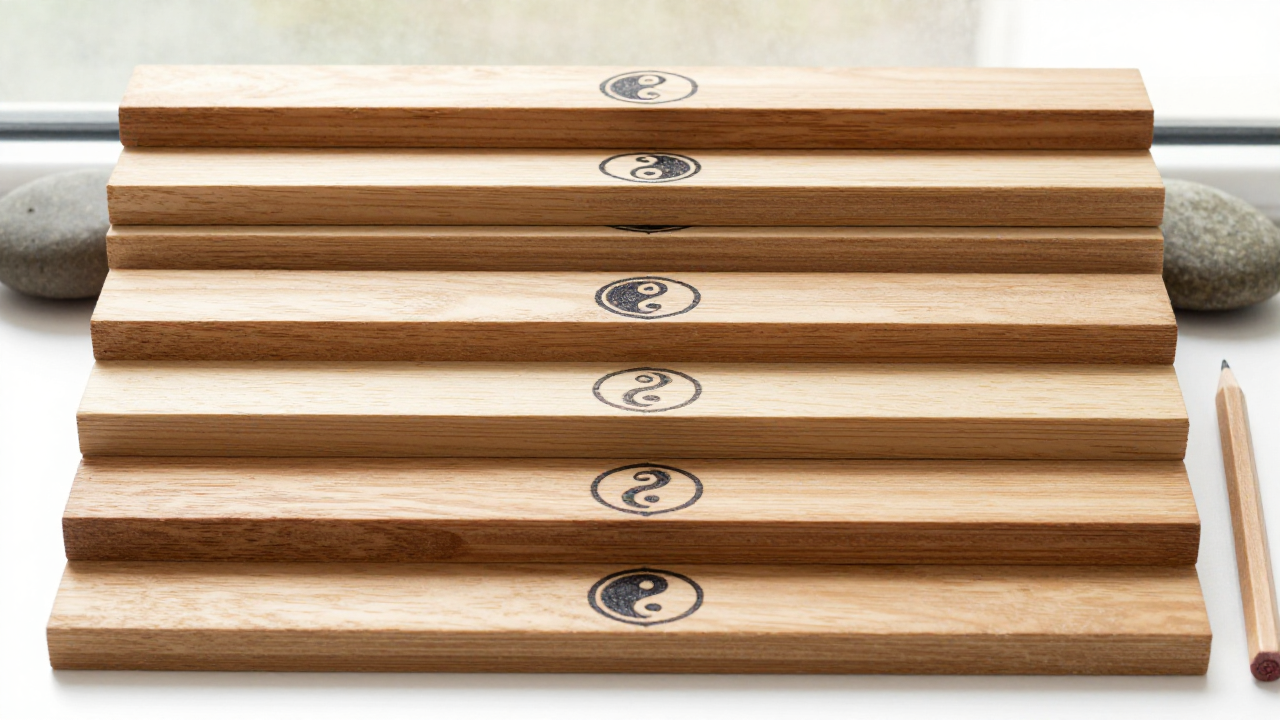
Group the lines into lower and upper trigrams
The six-line stack can also be viewed as two groups of three. The lower three lines form one trigram, and the upper three lines form another. This grouping helps many readers understand why two hexagrams with similar-looking pieces can still differ in position and emphasis.
Treat the trigram grouping as a way to organize the record, not as a shortcut around the full hexagram. A lower trigram and an upper trigram interact through position. Swapping them changes the figure, even when the same two trigram names appear.
For a beginner, the useful practice is to mark the lower group and upper group after the six lines are recorded. That small step makes lookup easier and keeps the page from becoming a pile of isolated line marks.
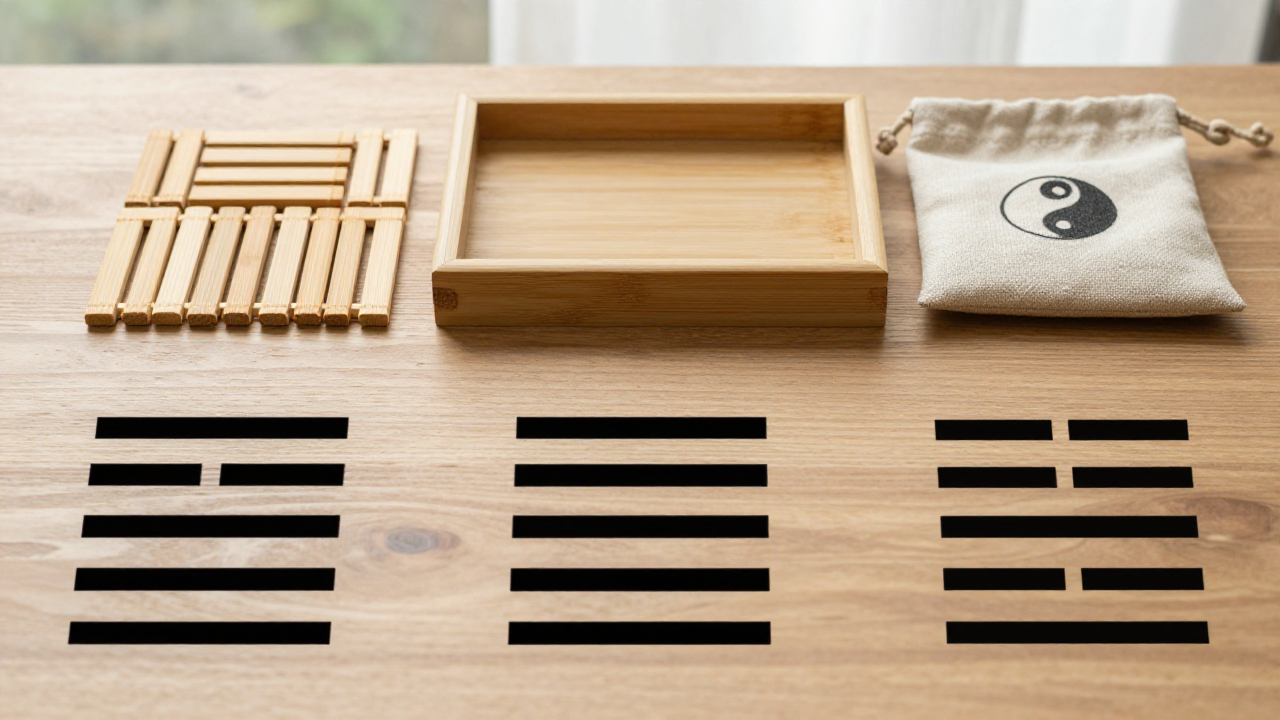
Treat moving lines as notes, not decoration
Some casting methods distinguish stable lines from moving lines. A moving line can point to a changing relationship between the first hexagram and a later figure. It should be recorded beside the line position, because the note belongs to a specific place in the stack.
Do not erase the original line when adding a moving-line note. The main hexagram still needs its six visible positions. Then the moving line can be handled according to the method or translation being used. This prevents the reading from mixing the initial record with the changed figure.
If a tool or book gives a moving-line result, save the exact position rather than only copying the prose. A future reader can then see whether the note belonged to the second line, fifth line, or another position.
Keep line meaning inside a sourced reading
Yin and yang line names are useful because they make the record readable. They do not guarantee an outcome. The responsible interpretation keeps the visible pattern, the source used for lookup, and the reader question in separate fields.
When comparing sources, expect wording differences. Translations, commentaries, and digital tools may explain the same figure in different language. The line record anchors the comparison: six positions, solid or broken, and any moving-line notes.
A careful reader can therefore say what was recorded and what source was consulted without claiming certainty about the future. That is enough for a useful I Ching note and avoids stretching a line mark beyond its evidence.
Line-record checks before interpretation
- Record each line as solid or broken.
- Write the lines from bottom to top.
- Mark lower and upper trigram groups only after all six lines are present.
- Save moving-line positions separately.
- Name the source used for the lookup.
Yin and yang line questions
Is a broken line yin or yang?
A broken line is commonly read as yin in basic I Ching notation.
Is a solid line yang?
Yes, an unbroken line is commonly read as yang.
Why read lines from bottom to top?
Casting methods build the hexagram from the first line upward, so bottom-to-top order preserves the original record.
Can one line explain a whole reading?
No. A single line mark needs its position, the other five lines, and the chosen source context.