I Ching Hexagram Meaning: Six-Line Facts and Moving Lines
Learn what an I Ching hexagram is, how to record six lines, use a lookup, and handle moving lines without treating the reading as certainty.
An I Ching hexagram is a six-line figure used to locate a reading in the I Ching. The useful beginner sequence is to record the lines, identify the main hexagram, note any moving lines separately, and treat the meaning as reflection rather than a guaranteed prediction.
Hexagram facts before interpretation
- Basic form
- An I Ching hexagram is a six-line figure made from broken and unbroken lines.
- Lookup task
- A reader usually records the six lines first, then finds the matching hexagram name and text.
- Moving lines
- Changing lines can point to a second related hexagram, depending on the method and edition used.
- Best use
- Use the hexagram to frame a question, pattern, or tension rather than to force a guaranteed prediction.
- Source boundary
- Translations and commentaries differ, so the page explains a reading workflow, not one final doctrine.
Read the six-line shape before the name
An I Ching hexagram begins as a visible six-line pattern. Each line is either solid or broken, and the order matters because a different stack leads to a different entry in the text. Before looking for a dramatic meaning, write the six lines clearly from bottom to top and make sure the record matches the method you used.
This first step is practical. If the line record is unclear, the interpretation becomes unclear as well. A beginner can draw the lines in a notebook, mark the date, and keep the question beside the pattern. The page then becomes an anchor: you can return to what was actually cast instead of relying on memory.
The name of the hexagram is useful, but it should not erase the shape. The six-line figure gives the reading its structure. Treat the name as an entry point into the text, then compare it with the question and the situation you already know.

Use a hexagram lookup without skipping your record
A lookup table is most useful after the record exists. Many editions and tools help match the lower trigram, upper trigram, or line pattern to one of the 64 hexagrams. That convenience should not replace the basic note. Write the pattern first, then use the table to identify the entry.
The reason is simple: lookup tools can make the answer feel instant, while a written record keeps the reading accountable. If you later compare two translations or review a moving-line note, the original pattern shows whether you are still reading the same result.
For an online reading, keep the same habit. Save or copy the hexagram number, the line pattern, the question, and any moving lines before reading commentary. The record protects the reading from becoming a search for the most comforting phrase.
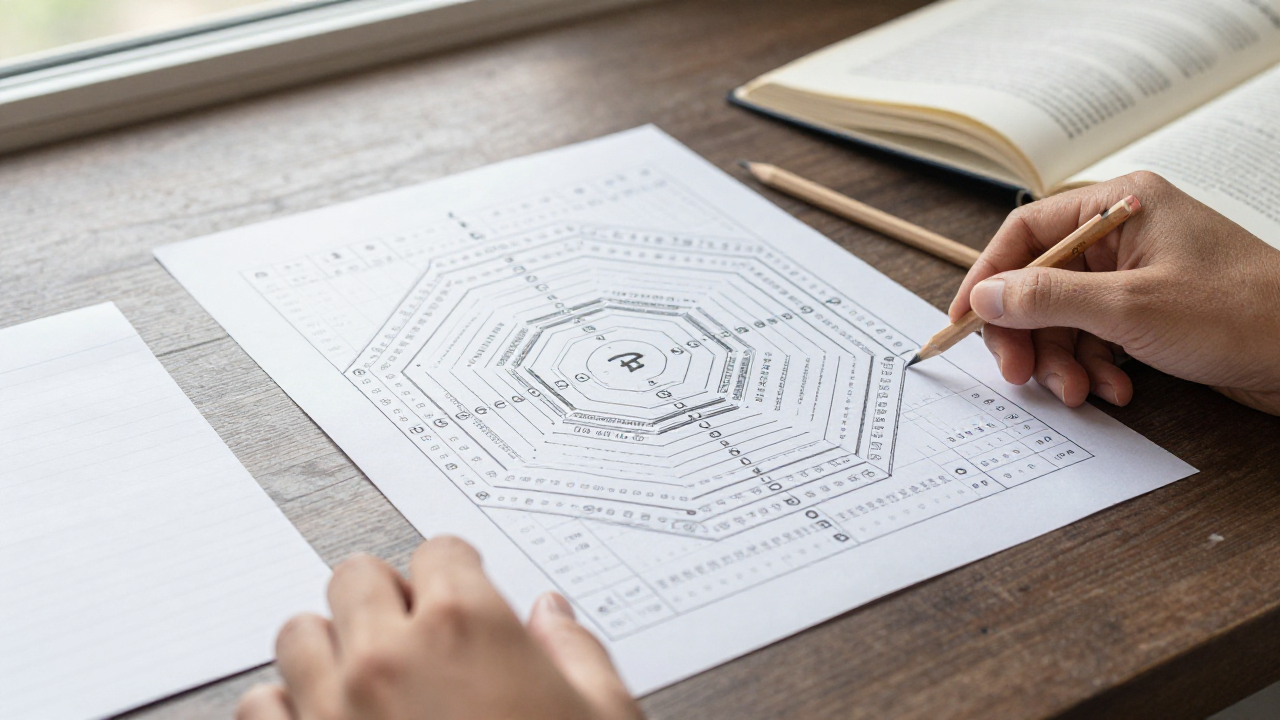
Separate the main hexagram from moving-line notes
Some I Ching methods produce moving lines. In many readings, those lines add comments and may point toward a second changed hexagram. It helps to separate those layers on the page: main hexagram first, moving lines second, related or changed hexagram third if your edition uses that structure.
This order keeps the interpretation from becoming crowded. A moving line can highlight a pressure point, a warning, a change of pace, or a detail that deserves attention. It does not mean every sentence in every section has equal weight. Start with the main pattern, then add the moving-line material carefully.
If different editions handle changing lines differently, note that difference rather than pretending it is not there. The useful article-level answer is a workflow: record the result, identify the main entry, read the moving lines in context, and avoid turning symbolic language into a command.
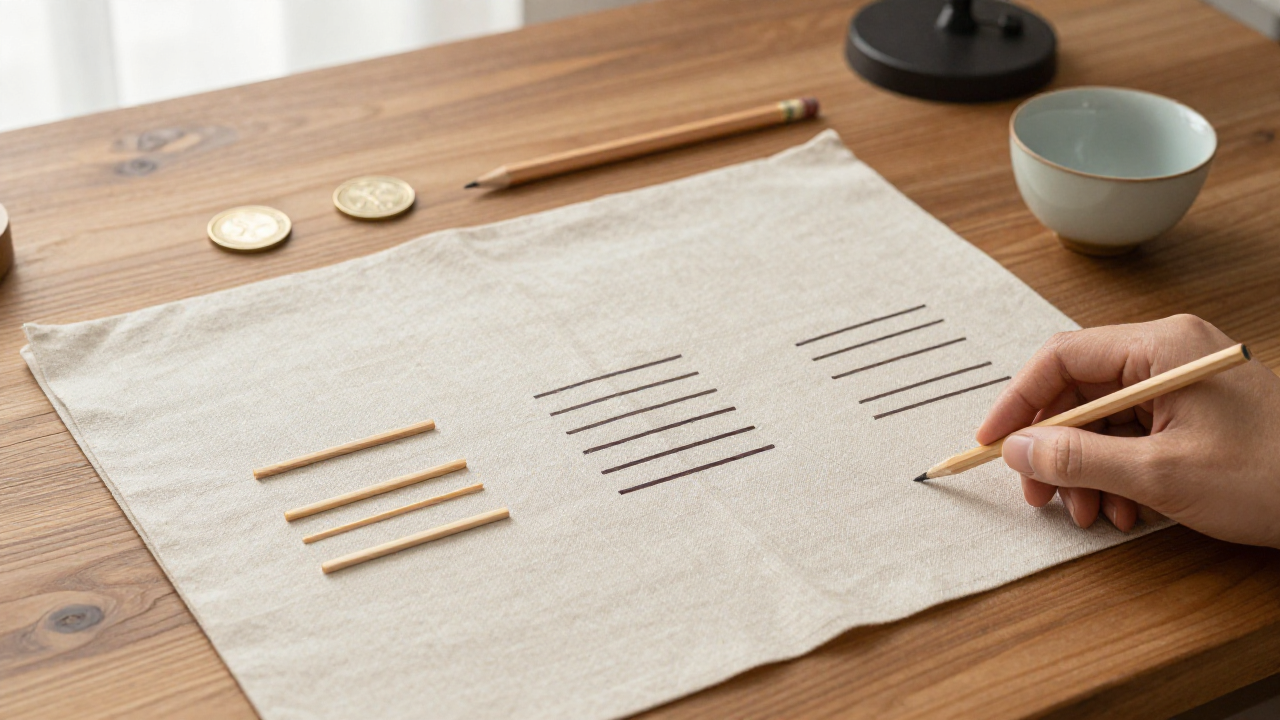
Keep hexagram meaning inside a real question
The strongest use of an I Ching hexagram is not a one-word label. It is a way to hold a real question still long enough to examine it. Ask what the pattern makes visible: timing, preparation, conflict, cooperation, waiting, pressure, or a boundary that needs respect.
Do not use a hexagram as proof that a risky action will work, that another person will behave a certain way, or that a health, legal, or financial decision is settled. Those questions need evidence, consent, and qualified judgment outside the reading.
A grounded note is enough: this hexagram made me notice one missing fact, one conversation I have delayed, or one condition I should check before acting. That kind of record keeps the hexagram meaningful without handing responsibility to it.
A clean hexagram lookup record
- Write the question before drawing or entering the six lines.
- Record the line pattern from bottom to top before reading commentary.
- Identify the main hexagram separately from any moving-line notes.
- Use a lookup table or tool only after the record is clear.
- Write one ordinary next step that does not depend on a guaranteed prediction.
I Ching hexagram questions
What is an I Ching hexagram?
An I Ching hexagram is a six-line figure made from broken and unbroken lines. It is used to locate a specific entry in the I Ching and begin a structured reflection.
How many I Ching hexagrams are there?
The I Ching tradition uses 64 hexagrams. Each one has a different six-line pattern and is read with the text, question, and method in mind.
Do moving lines change the hexagram meaning?
Moving lines can add a layer of interpretation and may point to a related changed hexagram, depending on the method and edition. Record them separately from the main hexagram.
Can a hexagram predict exactly what will happen?
No. This site treats hexagrams as cultural and reflective structures, not guarantees about future events, health, money, relationships, or other people's choices.